Deciding between renting and buying in Providence, Rhode Island centers on a 4 to 5 year break-even horizon. With citywide median home prices at $580,000 and average monthly rents at $2,150, purchasing builds long-term equity and shields residents from annual rent escalations, while renting provides mobility for those residing in Providence for under three years.
Evaluating Your Housing Options Across Providence?
Compare available rental alternative condominiums and turnkey homes across Downtown and the East Side:
Comparison Metric | Renting in Providence | Buying in Providence |
|---|---|---|
Monthly Outlay | $1,850 to $2,800 monthly rent | $2,750 to $3,950 mortgage, taxes, insurance |
Upfront Capital Required | First month, last month, security deposit ($4,000 to $6,000) | 5% to 20% down payment plus 3% closing costs ($35,000 to $130,000) |
Equity & Appreciation | Zero equity build, exposed to annual lease rate hikes | Full principal paydown and regional value appreciation (+10.2% county growth) |
Maintenance & Repairs | Landlord responsibility | Owner responsibility (budget 1% to 2% property value annually) |
Mobility & Commitment | 12-month standard lease agreement | Minimum 3 to 5 year recommended ownership horizon |
Tax Advantages | None | Mortgage interest and municipal property tax deductions |
Our Pick For [buyer profile] | Transitional professionals, students, and residents staying under 3 years | Long-term residents, relocating Boston commuters, and multi-family investors seeking equity |
Source: State-wide Multiple Listing Service (MLS), City of Providence Tax Assessor data, and U.S. Census Bureau housing figures.
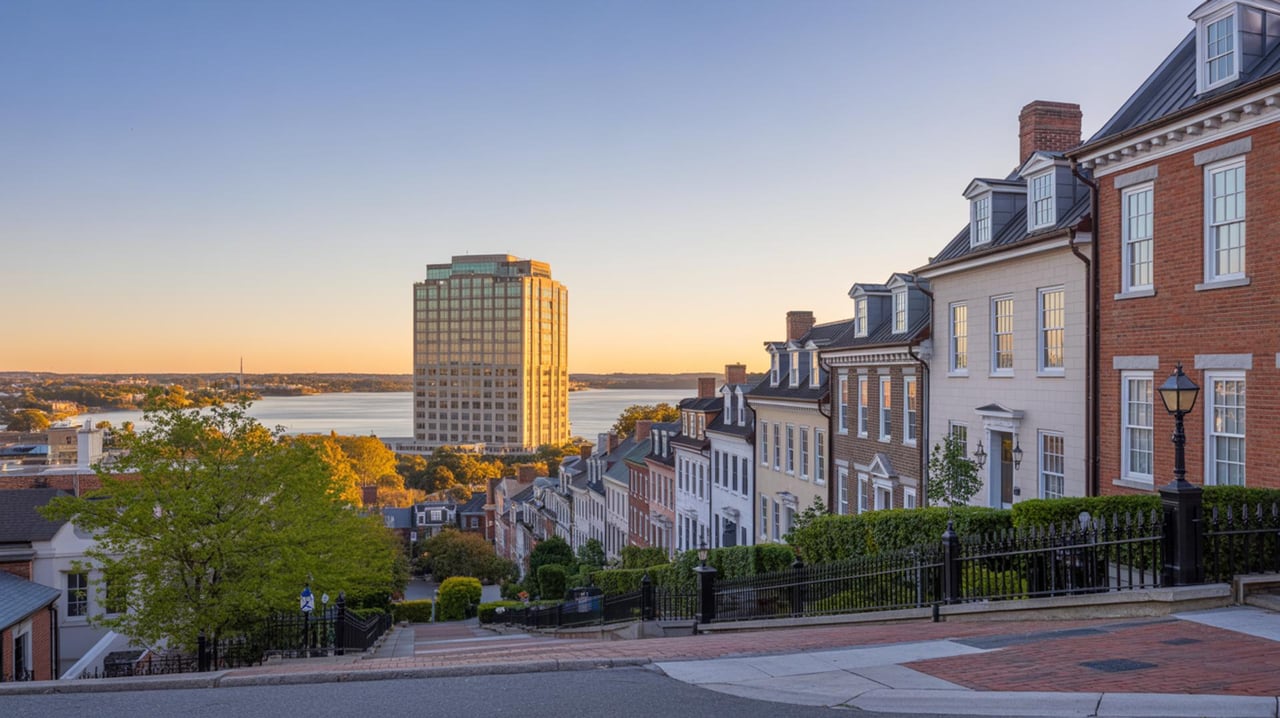
Deciding between renting and buying in Providence requires weighing immediate capital outlay against long-term financial positioning. The Rhode Island capital presents an attractive housing landscape shaped by historic preservation districts, major academic anchors including Brown University and RISD, and active healthcare employment. Whether renting offers needed career flexibility or buying establishes a long-term asset depends heavily on submarket pricing and your expected time horizon.
Financial Comparison: Monthly Carrying Costs and Upfront Capital
The financial barrier to entry marks the sharpest distinction between renting and buying across Providence County. Securing a rental property generally requires first month rent, a security deposit, and occasionally last month rent, totaling between $4,000 and $7,000 for standard one or two-bedroom units.
Purchasing a home involves larger upfront capital commitments:
- Down payment requirements: Conventional loans typically range from 3% to 5% for first-time buyers ($17,400 to $29,000 on a $580,000 home) up to 20% ($116,000) to eliminate private mortgage insurance (PMI).
- Closing costs: Mortgage underwriting, title insurance, appraisal fees, and municipal tax escrows typically add 2.5% to 3.5% of the purchase price.
- Ongoing municipal property taxes: Providence property tax rates incorporate an owner-occupied homestead exemption, reducing effective carrying costs significantly compared to non-owner occupied investor properties.
Break-Even Horizon and Equity Accumulation
In Providence, real estate historically rewards buyers who remain in their homes for four or more years. During the initial two years of homeownership, transaction costs, closing expenses, and interest payments outweigh rental savings. However, by year four, principal paydown combined with localized appreciation balances out acquisition expenses.
With Providence County recording a 10.2 percent annual increase in median property values, homeowners build wealth through forced savings and asset growth. Conversely, renters face localized lease increases of 4% to 8% annually across East Side and Downtown buildings, without capturing equity.
Neighborhood Variations: Downtown, East Side, and Elmhurst
The choice between renting and buying varies dramatically by neighborhood submarket:
Downtown Providence: Features high rental density, with converted mill lofts and luxury apartment communities lining Washington Street and Westminster Street. Condominiums here offer accessible entry points for buyers seeking maintenance-free living close to the MBTA rail station.
The East Side and College Hill: The historic core of Providence, where median home prices exceed $825,000. Renting allows newcomers to experience the walkable lifestyle of Wayland Square and Hope Street without purchasing at premium valuations. However, buying single-family homes or historic multi-family properties here provides unmatched historical value retention.
Federal Hill and Elmhurst: Strong territory for multi-family home purchases. Many buyers purchase two-family or three-family properties (triple-deckers), occupying one unit while renting the others to cover a substantial portion of the monthly mortgage note.
Lifestyle Flexibility, Maintenance, and Capital Risk
Beyond spreadsheets and interest rates, lifestyle considerations dictate the optimal housing route. Renting delivers predictable monthly budgeting. When an aging boiler fails, roof shingles leak, or plumbing lines require replacement, the financial and logistical burden rests with the property manager or landlord.
Homeownership grants complete physical freedom to renovate, landscape, add accessory dwelling units, and host pets without landlord approval. For buyers planning to establish roots in Rhode Island, buying provides housing security and insulates against displacement in appreciating neighborhoods.
Authored by Nelson Taylor and The Blackstone Team at Compass
The Blackstone Team at Compass is Rhode Island's premier residential real estate advisory group, ranked number three statewide by sales volume by RealTrends Verified. With over 80 years of combined local market experience, the team guides clients through buy-versus-rent calculations, investment modeling, and neighborhood selection across Providence and Narragansett Bay communities.
Connect with The Blackstone Team for an individualized Providence buy-versus-rent analysis.
Frequently Asked Questions
What is the average rent compared to mortgage payments in Providence RI?
Average apartment rents in Providence range between $1,850 and $2,800 monthly depending on location and building finishes. A mortgage payment on a median-priced $580,000 home with 10% down typically ranges from $3,100 to $3,700 monthly including property taxes and hazard insurance.
How many years does it take to break even on buying a home in Providence?
Most buyers in Providence reach a financial break-even point in four to five years. In appreciating submarkets like College Hill, Fox Point, and Elmhurst, strong equity growth and principal reduction compensate for upfront closing costs and mortgage interest within this timeframe.
Can you buy a multi-family property to offset homeownership costs in Providence?
Yes. Providence has a rich inventory of two-family and three-family properties where owners can reside in one unit and lease the remaining apartments. Rental income from adjacent units often covers 50% to 100% of the primary mortgage payment.
What upfront costs should buyers expect in Providence County?
Buyers should prepare for a minimum down payment of 3% to 5% for conventional financing, along with 2.5% to 3.5% in closing fees, loan origination costs, title insurance, and pre-paid escrow reserves. On a $500,000 property, total liquid capital needed typically ranges from $30,000 to $45,000.