If you like the idea of homeownership in Warwick but not the full workload of a detached house, a condo or townhouse may be worth a closer look. These properties can offer a lower-maintenance lifestyle, easier access to shared amenities, and a practical option for commuters, downsizers, and buyers who want to stay connected to what Warwick offers. The key is understanding that the monthly cost, maintenance responsibilities, and rules can look very different from a single-family home. Let’s dive in.
Why condo and townhouse living matters in Warwick
Warwick is still mostly an owner-occupied, single-family market. Census data shows a 73.3% owner-occupied housing rate, and the city’s 2024 housing plan says 89% of owner-occupied homes are single-family, while another 4% are in 1-unit attached housing such as townhouses, duplexes, or rowhouses.
That makes attached housing a smaller part of the local market, but still an important one. If you are comparing options in Warwick, condos and townhouses can fill a useful middle ground between renting and taking on the full upkeep of a detached home.
Warwick’s housing plan also describes the condominium market as active but uneven over time, with long-term price appreciation and changing sales volume. In simple terms, that means these homes can be appealing, but they are not automatically the cheapest option once fees and ownership structure are part of the picture.
What a condo is
A condo is usually an individually owned unit inside a larger building or community with shared facilities and common areas. Those shared areas are owned collectively and are typically managed by a condo association or HOA.
That setup matters because you own your unit, but you also share responsibility for common spaces. Depending on the community, that can include entrances, parking areas, clubhouses, pools, or other common elements.
What a townhouse is
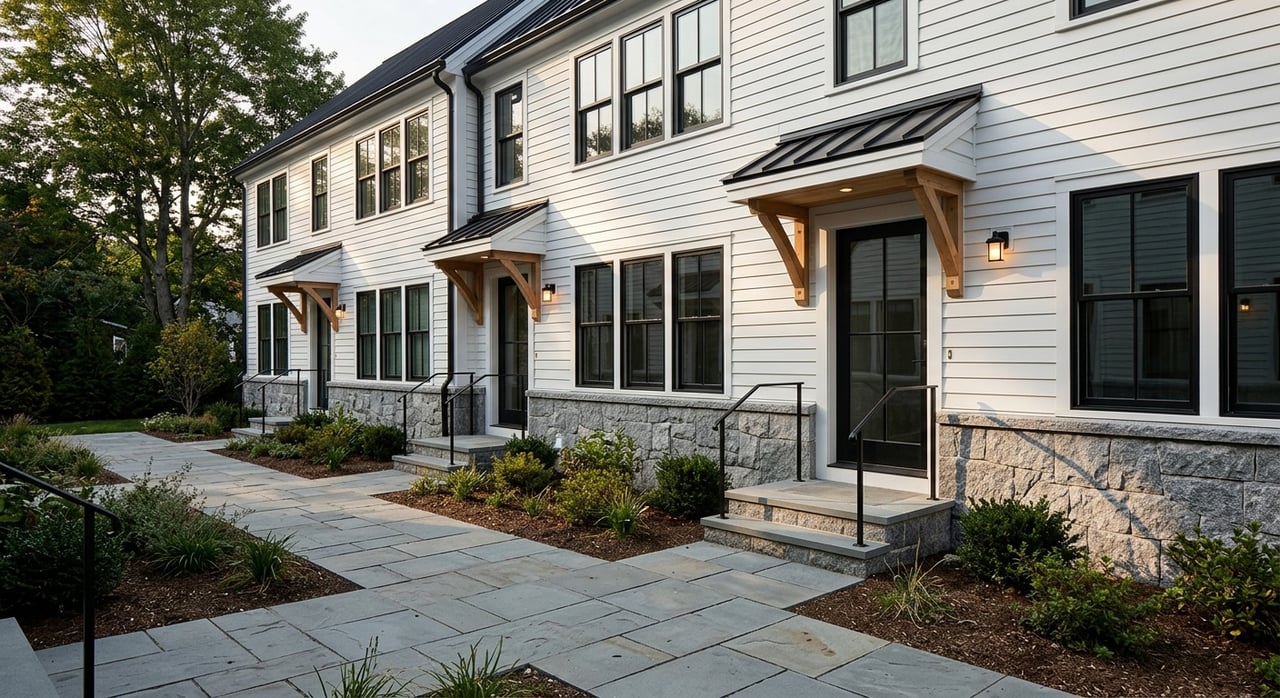
A townhouse is a home style, not always a separate legal ownership type. It is generally a two- or three-level home attached to neighboring homes by a shared wall.
In practice, a townhouse can sometimes be owned in condominium form. That means the home may look more like a traditional attached house, but the legal documents may still place parts of the exterior or shared areas under an association’s control.
Why the difference matters
This is where many buyers get tripped up. The building style and the legal ownership model are not always the same thing.
Two homes may both look like townhouses, but one may function like a condo from a legal and maintenance standpoint. Before you buy, you want to know exactly what you own, what the association maintains, and what your monthly dues actually cover.
How HOA living works in Rhode Island
In Rhode Island, condominium associations can adopt bylaws and rules, set budgets, collect assessments, hire managing agents, and regulate common elements. By default, the association is responsible for maintaining, repairing, and replacing common elements, while the unit owner is responsible for the unit itself unless the declaration says otherwise.
That means the governing documents are not just technical paperwork. They define how the community runs, who pays for what, and how decisions are made.
What your dues may cover
Association dues vary by community and by what the association is responsible for. In some cases, dues help cover maintenance of shared spaces, insurance for common elements, or reserve funding for future repairs.
The important part is to treat dues as part of your true monthly housing cost. You should evaluate a condo or townhouse payment as mortgage, taxes, insurance, and association dues together, not just principal and interest.
What your dues may not cover
Even if a community has monthly dues, that does not mean every expense is included. You may still be responsible for parts of the unit interior, certain utilities, and your own unit-level insurance.
Rhode Island law also allows community documents to assign limited common elements to specific units. So if a patio, deck, parking area, or other feature is tied to your unit, the documents should clarify who maintains it and how costs are allocated.
Insurance and special assessments
Insurance is one of the biggest differences between condo ownership and owning a detached home. In many condo communities, a master insurance policy covers building exteriors and common elements, while an HO-6 policy is used for the unit interior when the master policy does not.
This is one reason buyers should ask detailed questions before closing. You want to know what the master policy covers, what kind of personal policy you will need, and whether the association has built adequate reserves.
Special assessments are another issue to watch. These are one-time charges above regular dues that may be used for unexpected costs or major repairs, especially if reserve funds are not enough.
Rules, changes, and shared decision-making
Condo and townhouse living usually involves more shared decision-making than detached-home ownership. You may have less privacy, more community rules, and limits on changes to the property’s exterior appearance.
Rhode Island law says a unit owner may not change the appearance of common elements or the exterior appearance of the unit without association permission. If you are used to making updates freely, that is an important difference to understand up front.
Why Warwick can be a strong fit
For many buyers, Warwick offers a lifestyle that pairs well with lower-maintenance housing. The city has direct access to I-95 and I-295, public bus access, T.F. Green Airport, and the InterLink station with MBTA commuter rail service.
The city also describes itself as one of Rhode Island’s most accessible communities, with Providence about 10 minutes away and Boston about 1 hour away. If you commute, travel often, or want a home base with strong regional access, that convenience can be a major advantage.
Recreation and waterfront access
Warwick also stands out for its recreation and shoreline features. The city reports 39 miles of coastline, 9 beaches, 15 marinas or yacht clubs, and more than 50 parks and playgrounds.
For some buyers, that makes condo or townhouse living especially appealing. You may be able to spend less time on exterior upkeep and more time enjoying waterfront areas, parks, and everyday convenience.
What to review before you buy
In Rhode Island, a condo resale comes with a specific document process. Before closing, the seller must provide the declaration, bylaws, and rules or regulations, along with a certificate that states the monthly common expense assessment, unpaid assessments, other fees, anticipated capital expenditures, and insurance coverage.
The association must provide that certificate within 10 days of request and may charge up to $125 to prepare it. Just as important, a purchaser is not liable for unpaid amounts beyond what the certificate shows.
Your due diligence checklist
Before you move forward on a Warwick condo or townhouse, review these items carefully:
- The declaration
- The bylaws
- The rules and regulations
- The monthly common expense assessment
- Any unpaid assessments
- Other fees charged by the association
- Anticipated capital expenditures
- Insurance coverage details
- Reserve funding questions
- Any limits on exterior changes or use of common areas
These documents are central to the decision. In Rhode Island, bylaws and recorded rules are filed in municipal land evidence records, which is one reason careful document review matters so much.
Pros and tradeoffs to weigh
There is no one-size-fits-all answer. The right fit depends on how you want to live and how comfortable you are with shared rules, monthly dues, and association oversight.
Here is the practical balance many buyers consider in Warwick.
Potential benefits
- Less exterior maintenance than many detached homes
- Shared amenities in some communities
- A more manageable option for downsizers
- Practical appeal for commuters and frequent travelers
- Access to Warwick’s waterfront, parks, and transportation network
Potential tradeoffs
- Less privacy than a detached home
- Monthly dues that can significantly affect affordability
- Rules on exterior changes and common-area use
- Shared decision-making through the association
- Risk of special assessments if reserves are insufficient
The bottom line on Warwick condo and townhouse living
In Warwick, condos and townhouses can be a smart option if you want ownership with less day-to-day exterior upkeep. But the real decision is not just about the layout or the building style. It is about the ownership structure, the association rules, the monthly cost, and how well the lifestyle fits your goals.
When you understand the governing documents first and the lifestyle second, you can compare these homes more confidently. That kind of clarity helps you avoid surprises and choose a property that truly works for the way you want to live.
If you are weighing condo or townhouse options in Warwick, The Blackstone Team can help you compare communities, review the big-picture costs, and move forward with clear, local guidance.
FAQs
What is the difference between a condo and a townhouse in Warwick?
- A condo is usually a legal ownership structure for an individual unit within a shared community, while a townhouse is usually a building style with attached walls. In Warwick, a townhouse may still be owned in condominium form, so you need to review the legal documents, not just the layout.
What do HOA fees usually cover in a Warwick condo community?
- HOA fees often help cover common-area maintenance, certain insurance costs, and reserves for future repairs, but coverage varies by community. You should review the declaration, budget details, and resale certificate to see what is actually included.
Are condo fees included in a Warwick mortgage payment?
- Usually no. Condo or HOA dues are generally separate from your mortgage payment, so you should budget for mortgage, taxes, insurance, and association dues together.
What documents should you review before buying a Warwick condo?
- You should review the declaration, bylaws, rules and regulations, and the resale certificate showing monthly assessments, unpaid fees, anticipated capital expenditures, and insurance coverage.
Can you change the exterior of a Warwick condo or townhouse unit?
- Not usually without approval if the exterior or common elements are controlled by the association. Rhode Island law says owners may not change the appearance of common elements or the exterior appearance of the unit without association permission.
Why do condos and townhouses appeal to buyers in Warwick?
- They can appeal to buyers who want less exterior maintenance while staying close to Warwick’s highways, bus access, airport, commuter rail connection, coastline, beaches, marinas, and parks.